

Tire Dog Toy Guide: Materials, Safety, and Play Types
You're standing in the pet aisle or scrolling a product page, and your dog needs something sturdier than a tennis ball but less boring than a plain rubber bone. Tire-shaped toys sit in that awkward middle space, part chew toy, part fetch toy, part tug toy, and the shape can make the choice feel more confusing than it should. The right way to look at a tire dog toy is simple, though, it's not about hype or “indestructible” promises, it's about material, size, and how your dog plays.
Table of Contents
- Why the Tire Shape Earns Its Spot in the Toy Bin
- The Anatomy of a Tire-Shaped Toy
- Materials and Construction That Drive Durability
- Matching Tire Toys to the Way Your Dog Plays
- The Truth Behind the Indestructible Marketing
- Sizing Your Dog to the Right Tire Diameter
- Inspection Routine That Keeps Play Safe
- Putting It All Together for Your Next Purchase
Why the Tire Shape Earns Its Spot in the Toy Bin
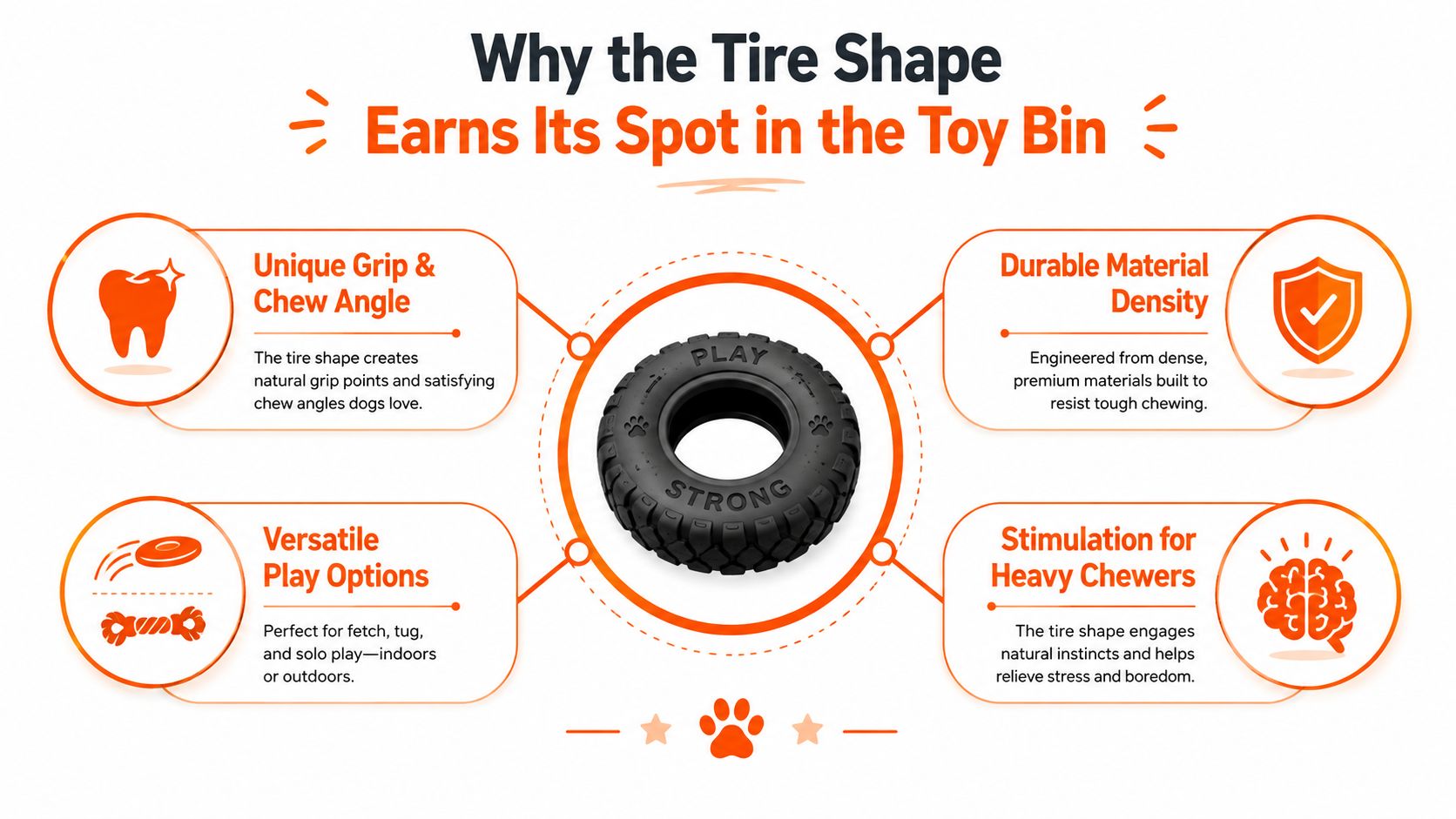
A lot of owners compare a tire toy with a ball, a rope, or a plush toy and assume the difference is mostly cosmetic. It isn't. The tire shape changes how a dog grips, pins, shakes, and carries the toy, so the object feels more interactive than a simple chew.
Why dogs engage with it differently
The hollow center gives a dog a place to hook a tooth or paw. The rounded outer tread gives a predictable bite surface, while the thick ring shape makes it easier to carry than a flat disc and easier to pin than a ball. That mix matters because dogs rarely play in neat categories, they switch between chewing, chasing, and tugging in the same session.
Practical rule: if a toy lets your dog grip it, compress it, and shake it without the object collapsing immediately, you're looking at an interactive design, not just a chew object.
The tire form also sits naturally in the middle of the dog-toy market. Packaged Facts reported that U.S. sales of pet toys crossed $1 billion in 2016, up from $851 million in 2011, which shows how durable toy spending has become in major pet markets. Toy purchases keep coming back because dogs wear items out, lose interest, or outgrow softer play options, and a tire shape often lands in that repeat-buy zone. In practical terms, it's a toy category that's built for engagement, not just decoration.
The Anatomy of a Tire-Shaped Toy
A tire toy works because its parts do different jobs. The outer tread gives the dog a textured edge to bite into, the sidewalls flex under pressure, and the hollow center changes how the toy moves when it's tossed or tugged. That's why it doesn't behave like a bone or a ball, even when it's made of the same basic material.
Tread, sidewall, and center ring
The KONG Extreme Tire uses KONG Extreme Rubber with a thick outer tread and sidewalls that double up and rebound when compressed. That structure creates an elastic barrier that absorbs bite force and springs back during tug or fetch play. Target lists the toy at 1.75 in L × 7 in H × 4.5 in W and 0.5 lb, which places it in a medium-to-large interactive chew range rather than a light, flimsy play item. The shape matters, but the shape only works because the material and structure support it. (Target listing for the KONG Extreme Tire)
What to notice on a product page
Flat discs tend to encourage chasing and quick pickups. Balls reward bounce and retrieval. Tire toys sit closer to the tug-and-chew side because the ring gives dogs a more stable surface to clamp onto, especially when the toy is dense and slightly flexible.
If the product photo shows a thin ring with soft-looking walls, expect more play and less resistance. If it shows deep tread and thick sidewalls, expect better grip and more chew stability.
The smartest way to read a tire toy listing is to look past the silhouette. A good-looking shape doesn't tell you much unless you also know whether the wall is thick, the rubber is resilient, and the center opening fits your dog's mouth size.
Materials and Construction That Drive Durability
Material choice does most of the heavy lifting in a tire toy. Two toys can share the same shape and feel completely different in the mouth because one is soft and lightweight while the other is dense and rebound-heavy. That's why labels like natural rubber, heavy-duty, and recycled rubber deserve more attention than the marketing photo.
What the material actually changes
Denser rubber usually resists bite damage better because it spreads force instead of collapsing quickly. A thicker molded sidewall also matters because it gives the toy more structure at the point where tugging and chewing tend to concentrate. Reclaimed or recycled rubber can be appealing from a value or sustainability angle, but the label alone doesn't tell you how the toy will smell, flex, or break down under repeated chewing.
| Material | Typical Feel | Best For | Watch Out For |
|---|---|---|---|
| Natural rubber | Dense, springy, firm | Strong chewers, tug play | Can still wear down over time |
| Reclaimed rubber | Often heavier, sometimes less uniform | Budget-conscious buyers, casual play | Quality can vary, odor and fragmenting may be concerns |
| Softer rubber blend | Lighter, more flexible | Puppies, lighter chewers | Faster wear, easier punctures |
Independent product guidance notes that high-grade rubber tire toys can last 6 months to over 18 months, but aggressive chewers can reduce lifespan to only a few months, making weekly crack-and-split inspections a practical maintenance benchmark. That's the useful mental model, heavier and denser usually means more bite resistance, but it still has to match the dog in front of you. (Mammoth TireBiter product guidance)
The safest buying habit is to read the material label as a clue, not a promise. A tough-looking tire toy can still be the wrong toy if the compound is too soft, too small, or too easy for your dog to shred.
Matching Tire Toys to the Way Your Dog Plays
A tire toy works best when it fits the dog's favorite game. Some dogs want to chase. Others want to clamp down and pull. A few mostly want a toy they can sit with and chew in place. The shape can serve all of those styles, but different features matter for each one.
Four play styles, four feature priorities
- Fetch-driven dogs: Look for a tire that has enough bounce and a shape your dog can spot quickly after a throw. A medium-sized ring is usually easier to pick up than a flat object that skids unpredictably.
- Tug-driven dogs: Prioritize flexible sidewalls and a grip-friendly tread. The toy needs to bend without collapsing, because that gives your dog something to pull against.
- Solo chewers: Focus on dense rubber, thick walls, and a compact center opening. A dog that chews alone doesn't need flashy motion, it needs bite resistance and structure.
- Treat-stuffing dogs: Choose a tire with a hollow cavity that can hold smearable fillings. If the opening is too tight, the toy becomes frustrating instead of rewarding.
A simple way to think about it is this. If your dog loves running after toys, the tire should act like a fetch object first. If your dog loves wrestling with toys, it should act like a tug object first. The best products can do both, but the main use case should be obvious on the shelf.
The Bark Side carries a Five Senses Ball For All Ages of Dog, which shows how toy shape and play style can be matched to different kinds of engagement. That same logic applies here, the right choice is the one that matches what your dog repeatedly does, not what the packaging says the toy can do.
The Truth Behind the Indestructible Marketing
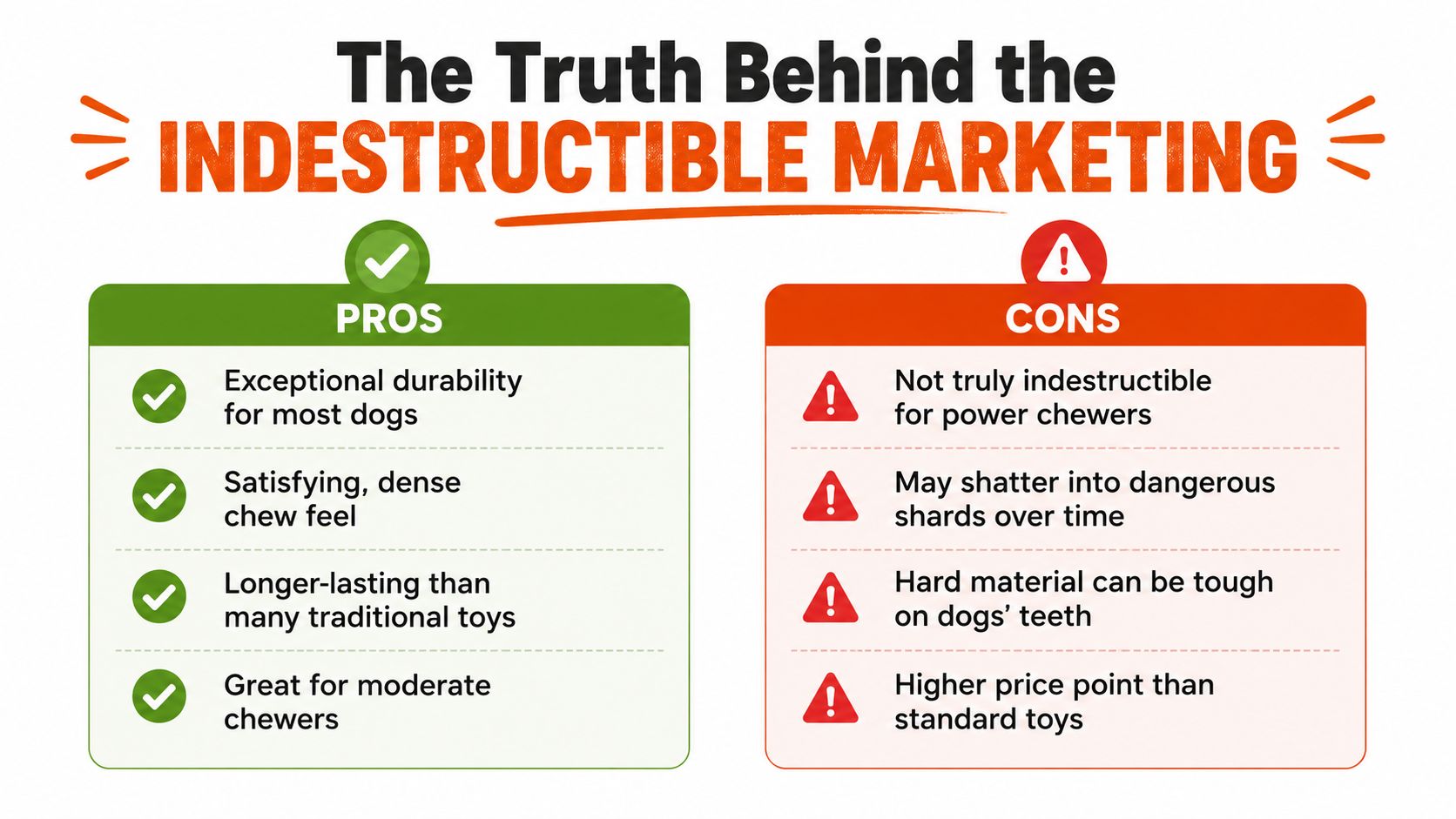
“Indestructible” sells, but it's a bad way to think about a dog toy. A tire shape can be tough, dense, and long-lasting without being permanent, and that's the standard owners should use. A toy that survives one dog's chewing style can fail fast with another dog.
Common failure modes to watch
Review coverage of tough toys routinely centers on shredding, rubber fragments, and the toy turning into unsafe debris, which is especially relevant for tire shapes that encourage intense chewing. That's the part marketing rarely says out loud. If a tire toy gets gnawed hard at one edge or repeatedly twisted during tug, the wear pattern won't look like a clean break, it will usually start as surface damage and move toward loose pieces.
Key point: “for aggressive chewers” is not the same thing as “safe forever.” It usually means the toy is built to last longer than average, not to survive unlimited force.
The style of play matters too. A tug-focused dog loads the sidewalls. A hard chewer pounds the outer tread. A dog that likes to whip the toy side to side can stress weak points faster than a dog that only carries it around. Once you see the wear pattern, the toy's limits become easier to predict.
That's why the key question isn't whether the toy is indestructible. The important question is whether it's dense enough, large enough, and inspected often enough for your dog's chewing habits.
Sizing Your Dog to the Right Tire Diameter
A tire toy can be safe on paper and still be the wrong fit in your living room. If it is too small, a dog may be able to swallow it, wedge it, or chew through it too quickly. If it is too large, the toy can feel clumsy in the mouth, lose its appeal, or end up ignored.
Read the diameter before you read the claims
A product listing should tell you more than “tough chew toy.” Small-to-medium tire toys often sit around 4.7 to 5 in diameter, which usually puts them in the range for puppies or lighter chewers. Larger heavy-duty versions, such as Mammoth TireBiter II, measure 10 × 3.75 × 1.75 in and are described with an advanced natural rubber formula for longer-lasting play. That size spread is the clue. Tire toys are built in different proportions for different mouths, and the measurements matter more than the marketing language. The size details on the product page are the part to read first.
A quick fit check
- Small dogs and puppies: Choose a tire they can mouth comfortably without swallowing the whole ring or losing control of it.
- Medium dogs: Look for a diameter that gives enough surface to grip, while staying light enough to carry and chew without strain.
- Large chewers: Choose thicker walls and larger diameters that stay outside the mouth enough to reduce the chance of the toy disappearing into one bite.
Bigger is not automatically safer. A toy that is oversized can become awkward enough that the dog stops engaging with it. A toy that is undersized can turn into a choking risk or get chewed down too fast. The right diameter is the one your dog can handle with control, while still leaving enough tire outside the jaw to keep the toy working the way it should.
Inspection Routine That Keeps Play Safe
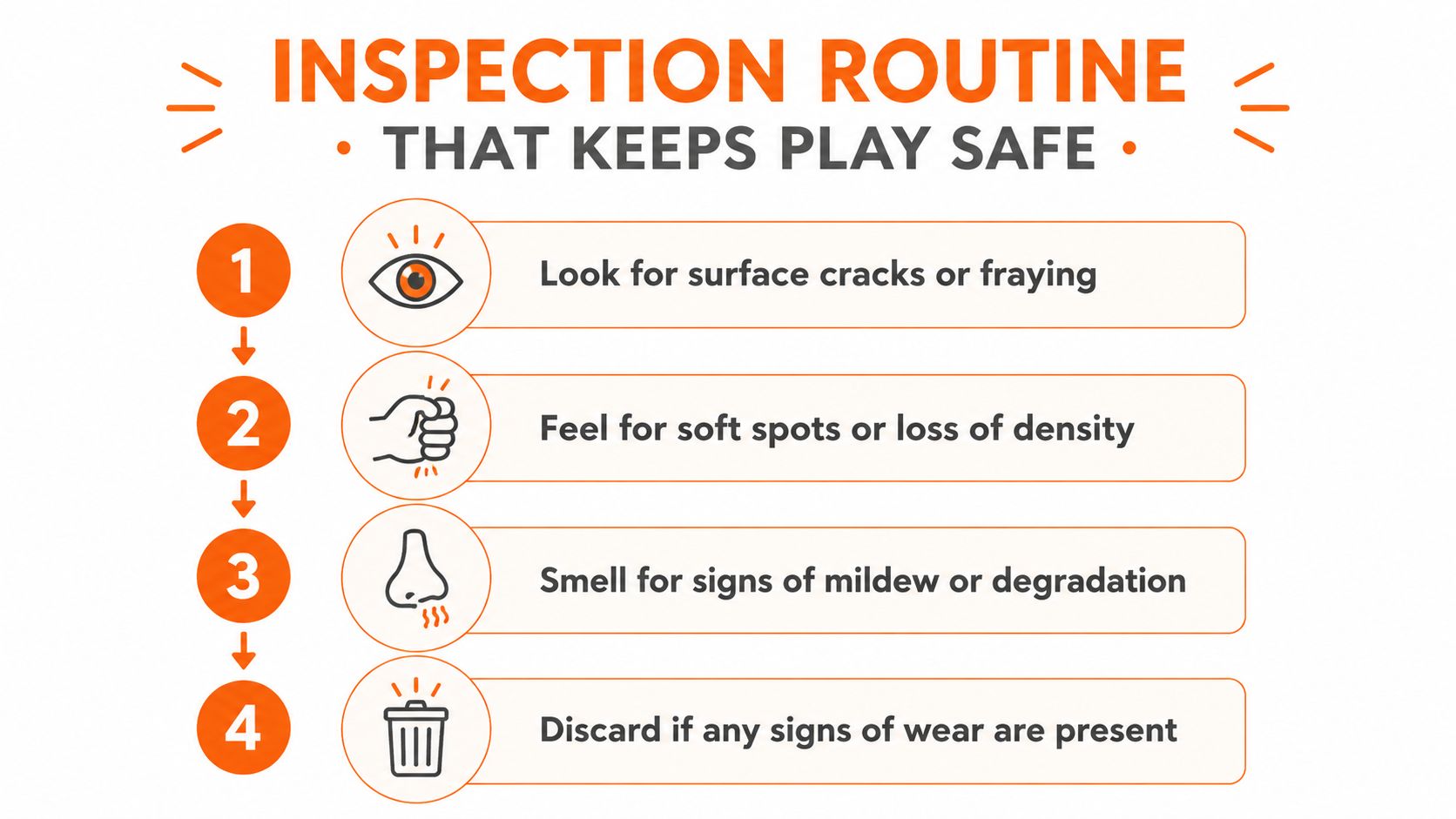
A tire toy can look fine from across the room and still be ready for retirement up close. Safety here is a habit, not a guess. The best routine takes less than a minute and catches damage before it turns into swallowed pieces or sharp edges.
The weekly check
- Look closely at the tread and sidewalls. Cracks, fraying, and missing chunks are the first signs that the toy is breaking down.
- Press the toy with your hands. Soft spots, uneven density, or sections that feel thinner than before usually mean the internal structure is wearing out.
- Smell it. A strong mildew or degradation odor can signal it's time to clean more aggressively or retire the toy.
- Discard it if wear is obvious. Once pieces start lifting, splitting, or flaking off, replacement is the safer choice.
A quick wash with mild soap and warm water helps reduce odor and grime, especially after outdoor play. Dry the toy fully before putting it back into rotation so trapped moisture doesn't create a mess or a smell problem.
Replace on damage, not on hope. If you're asking whether the toy is still safe, the answer is usually already changing.
Putting It All Together for Your Next Purchase
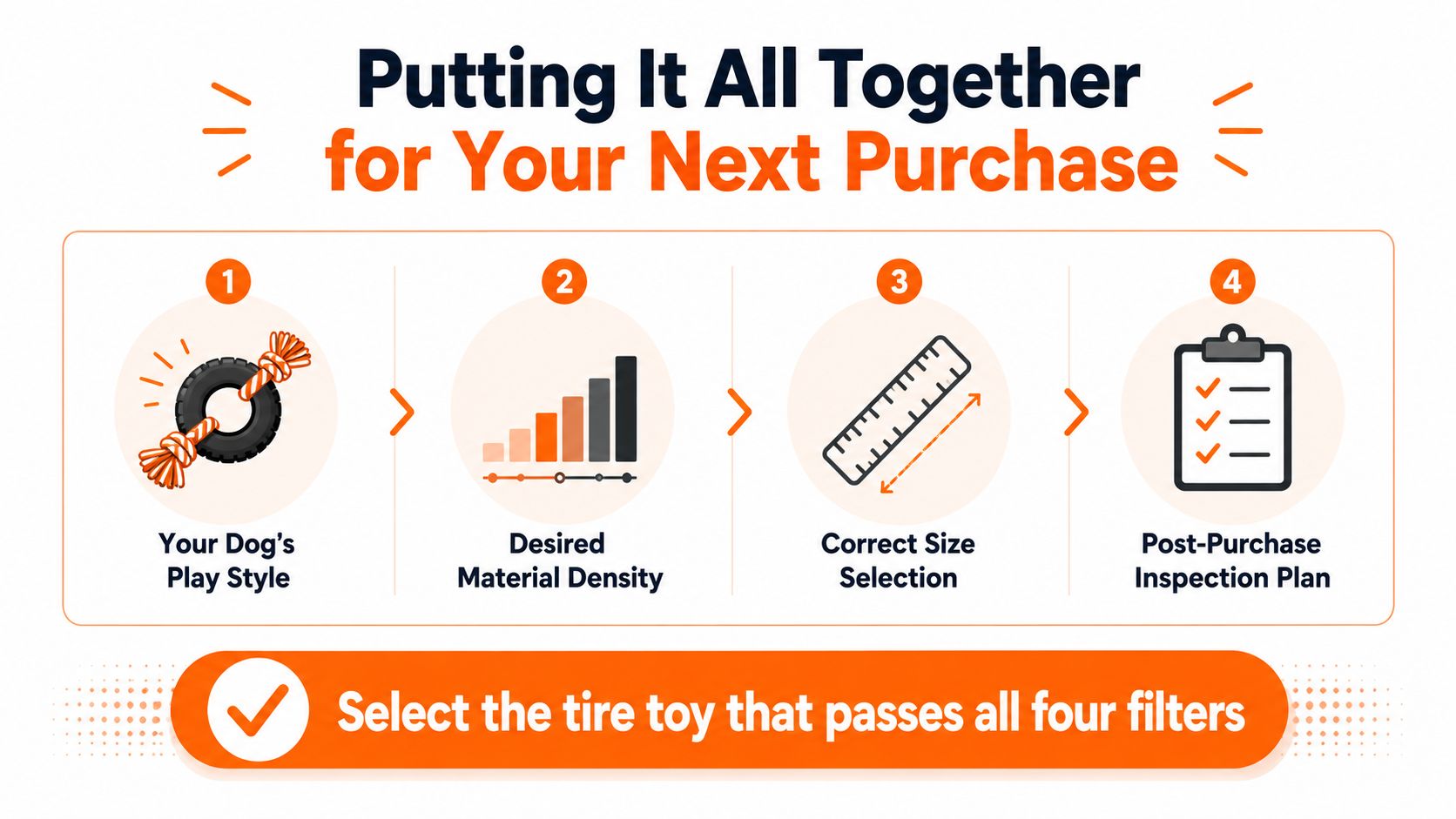
The easiest way to choose a tire toy is to run four filters in order. Start with your dog's play style, then check material density, then confirm size, then commit to a weekly inspection habit. If one of those filters fails, the toy probably isn't the right match.
A simple buying scenario
A puppy that mouths gently usually needs a smaller, softer tire that's easy to carry and less likely to overwhelm the jaw. An adult dog that chews hard needs a denser, larger ring with thick walls and a rubber compound built for repeated compression. The toy shouldn't win because of marketing language, it should win because it fits the dog.
Tire toys belong to a broad, durable part of the pet market, and chew-focused designs remain central to that demand. That's why the best purchase isn't the flashiest one, it's the one that matches the dog's bite, play style, and chewing habits without guessing. If you keep those three things in view, the tire shape becomes a smart option instead of a risky impulse buy.
If you want a practical place to browse alongside other pet and everyday items, take a look at The Bark Side. It's a straightforward way to compare toy options while you think through size, durability, and play style for your dog.
Written with the Outrank tool